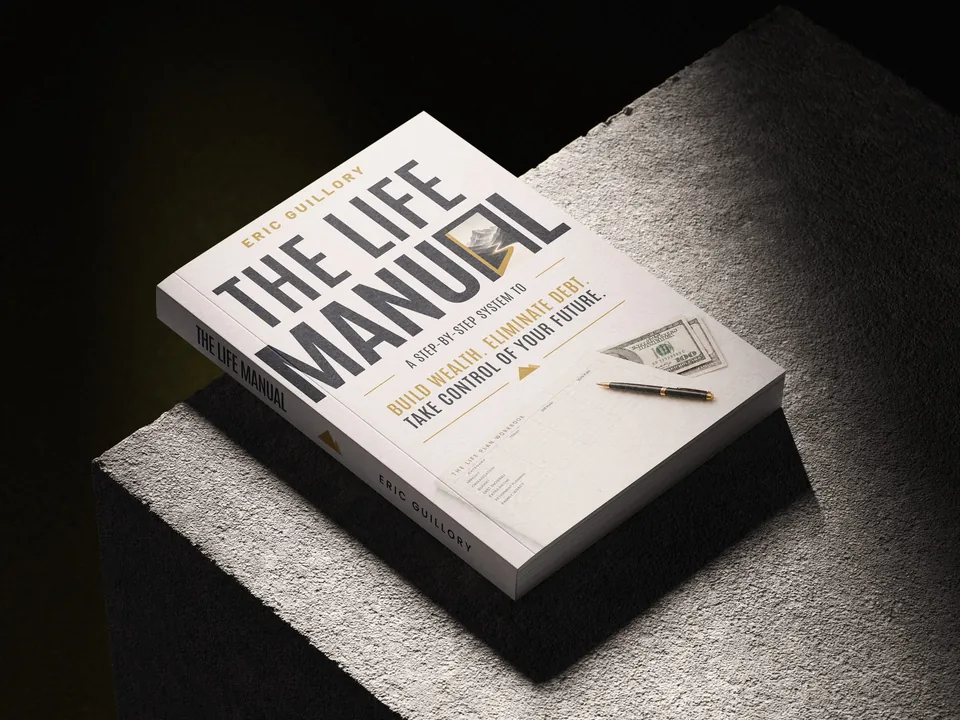
Some books give you ideas. This one asks you to do something with them.
It is possible to understand that saving matters, that debt has a cost, and that the future deserves a plan—and still reach the end of another month without doing anything differently. Knowing the words is only one part of the process. The Life Manual is built around the next part: looking at your own situation and deciding what you will do with what you have learned.
Eric Guillory’s manuscript moves between personal experience, straightforward explanations, and questions for the reader. You are invited to write down your numbers, describe your goals, and face the habits that help or hinder those goals. You do not need to agree with every sentence to use that process honestly. The work begins when the questions become specific to your life.
This is a book to read with a pen nearby. You can pause, make a list, try a calculation, or return to a section when a decision becomes more relevant. The purpose is to make a practical roadmap you can understand, rather than collect another set of good intentions that never leaves the page.
Why Eric wrote it
Eric describes growing up around the stress of bills that did not always line up neatly with income. That experience stayed with him. Learning about money in early adulthood gave him a different way to think about the years ahead. He wanted a future in which the household had more stability and fewer decisions made under financial pressure.
The story continues through a career in air conditioning and heating, business ownership, rental-property work, family life, and long-term investing. The book is personal about the effort involved. It also returns to the question of what that effort was meant to create: options, security, and a more deliberate life for the people he cared about.
Over time, passing those lessons on became part of the purpose. Eric writes about conversations with his children, employees, and grandson. The book gathers the kind of guidance he wanted them to have early enough to use. A reader can bring a different background and still recognize the value of having a clearer starting point.
Begin with awareness and cash flow
The opening material asks you to examine your starting point. Where does your income go? Which expenses keep your household functioning? What do you owe? What happens when an unexpected bill arrives? These questions can feel ordinary, but they are often the ones people put off while looking for a more exciting solution.
Cash flow connects the whole plan. An income increase can help, but its effect depends on what happens to spending, debt, and the amount kept for future needs. The book encourages readers to make those connections visible. The aim is to notice patterns while there is still an opportunity to change them.
You can pair that reading with the monthly cash flow planner. Enter a scenario, look at the remaining amount, and identify which category deserves a closer look. A calculator cannot choose your priorities, but it can help you see the consequences of the priorities currently reflected in the numbers.

Understand debt and build some breathing room
Debt and emergency preparation receive substantial attention throughout the manuscript. Eric distinguishes between borrowing used with a clear purpose and borrowing that quietly supports a lifestyle the current income cannot carry. He also shares his own experience using property debt, while acknowledging that such a path involves work and risk.
For household debt, the useful first step is a complete list. A balance without its interest rate or required payment tells only part of the story. The book asks readers to face the whole picture and work toward a plan they can follow. The site’s payoff tool lets you compare smaller-balance and higher-rate priorities using the same payment budget.
Preparation belongs beside that conversation. A first cash cushion can be a meaningful milestone, and a larger emergency reserve can become a later target. A household with uneven income, dependents, or expensive essential equipment may need to think carefully about its own risks. Use the book to begin the questions, then adapt the plan to your real circumstances.
Put time and growth into the picture
The book spends time on inflation, compound growth, and the cost of waiting. These are ideas that can sound abstract until they are attached to a number, a contribution, and a period of years. A longer view can help explain why the decisions made now matter to the choices available later.
The website’s calculators are designed to make the assumptions visible. You can change the contribution, time period, return, or inflation assumption and compare the result. Growth illustrations use a simplified steady rate. They do not predict a market, remove risk, or include every cost that could affect a real account.
Use those tools as a companion to the reading. Ask what changes when the assumption is less favorable. Separate the money deposited from hypothetical investment growth. Consider the difference between a near-term bill and a goal decades away. Those questions make the exercise more useful than simply choosing the largest projected balance.
Define the life behind the numbers
One of the book’s central ideas is that a goal needs a reason. The amount required to support a household, a work change, or a retirement plan depends on the life you want and the responsibilities you carry. A number taken from someone else’s story may have very little to do with your own.
Eric’s life-design questions invite readers to think about work, values, skills, family, and the meaning of enough. A young reader might be choosing a direction for the first time. A parent might be reconsidering the demands on income and time. An older reader might want a more understandable picture of the next stage.
Writing the answers down creates something you can revisit. It also makes a conversation with a partner, mentor, or professional more concrete. Instead of saying that you want to be better with money, you can explain what you are working toward, which part is uncertain, and what information would help you take the next step.
A workbook is an invitation to participate
Reflection questions are not a test with a hidden perfect answer. They are a way to slow the reading down and connect it to your own choices. Some answers may be short. Some may be uncomfortable. Some may change after you try a new routine or have a conversation you have been avoiding.
- Write the first honest answer before polishing it.
- Use current numbers when a question asks for your financial starting point.
- Mark questions you want to discuss with someone else.
- Choose an action small enough to begin this week.
- Put a date beside the action so you know when to review it.
You can work through the book alone or use it as a starting point for a family or group discussion. The useful measure is whether the process creates clarity and action. Reading quickly is less important than understanding what one section means for the decisions in front of you.
A practical gift or a group conversation starter
A book about money can be a thoughtful way to open a conversation, especially when the message is encouragement rather than criticism. A parent may want to share a roadmap with a young adult. An employer or community organizer may want a common starting point for a financial education program. A family may want to read and talk together.
If you are considering copies for a group, describe the audience and what you want the reading to support. The right inquiry includes the approximate quantity, timing, and whether you are also interested in a discussion or speaking program. It is easier to plan a useful experience when the purpose is clear before the logistics begin.
The speaking and workshop pages explain those audience paths. Book availability, quantities, delivery, and any event arrangements are confirmed separately. The inquiry form does not collect a payment or commit you to an order. It gives Eric the context to respond to what you actually need.
Read a little before deciding
The best way to get a feel for the book is to spend time with Eric’s voice and the questions he asks. Read the free chapter, think about your own starting point, and decide whether the approach helps you see something more clearly. You do not need a perfect plan before you begin.
If a particular idea stands out, try one action while it is fresh. Write down a bill list, choose a savings milestone, or start a conversation about the future. The book is meant to remain useful after that first read. You can come back with different questions as your life changes and your roadmap develops.