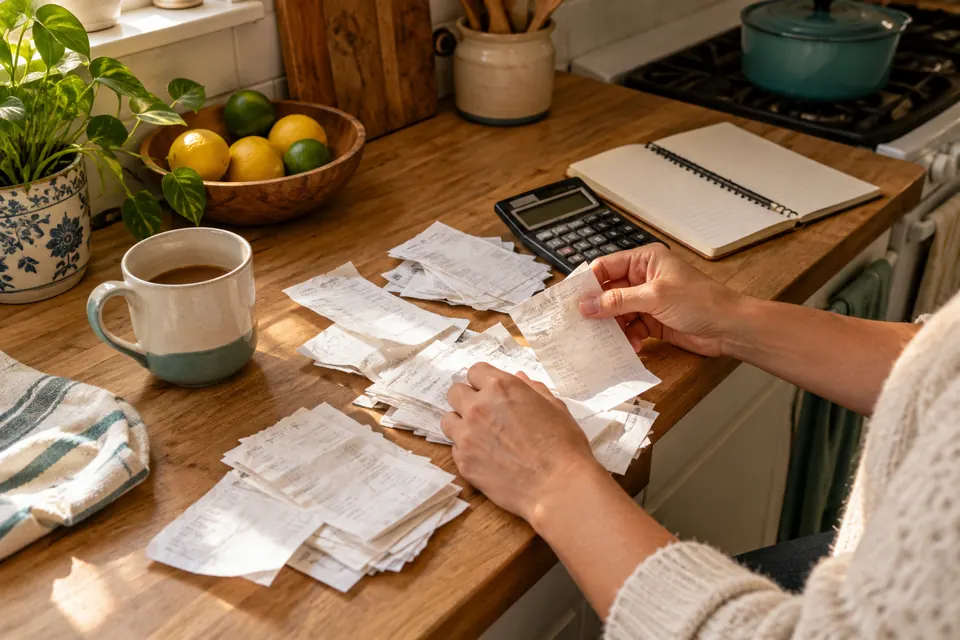
A receipt is information, not a verdict
You can earn money, pay bills and still reach the end of a month wondering where the rest went. That question deserves an answer you can work with. It does not require a speech about being more disciplined before you have looked at the information. A spending audit is simply a review of past transactions to understand patterns you may have missed while living through them.
The useful starting point is curiosity. What repeated? What was unusual? Which purchases solved a real problem, and which happened because an easier option was not ready? Looking backward gives the next decision more context. It does not make the last month a fair prediction of every month ahead, and it does not reveal a person's character from a bank statement.
Choose a review window that you can finish
Start with a period you can review without making the project so large that you avoid it. One recent month can provide a manageable first look. If the month included unusual travel, an emergency or a change in work, label that context. You can add another period later rather than treating an exceptional week as the whole story.
Gather records through your own secure accounts and keep them private. You do not need to upload transactions to this website or share them in a group. A notebook and totals can be enough for the learning exercise. If some transactions are missing, mark the gap. An honest incomplete review is more useful than a precise-looking total built on guessed information.
Separate purchases from money moving between your accounts

A transfer from checking to savings is not the same event as buying groceries. Paying a credit card may also include purchases already visible in the records you are reviewing. If you add both without understanding them, you can count the same spending twice. Decide what each record represents before you use it in a category total.
This is a practical sorting exercise rather than formal accounting. Write down your method so a later review uses the same logic. When a line is unclear, look at the underlying record or leave it flagged for follow-up. The goal is a picture you understand, not a fast total that quietly mixes spending, transfers, refunds and payments in incompatible ways.
Use a few categories that answer a real question
Begin with categories broad enough to maintain: housing and core bills, food, transportation, other household spending and items that need clarification. Your categories can change as you learn. A list with dozens of tiny distinctions may look thorough while making the first review much harder to complete.
Then ask what you want the categories to reveal. You might want to understand meals purchased during long shifts, small recurring charges or a costly week of travel. A category is useful when it helps you see a decision or prepare for an expense. It is less useful when it exists only to make the notebook look sophisticated. Keep the method close to the question you actually have.
Add frequency to the amount
One small purchase may be easy to overlook. A repeated purchase tells a different story because frequency changes the total. In a fictional example, a learner buys an eight-dollar convenience meal on twelve workdays. Those meals total ninety-six dollars. Four similar meals would total thirty-two dollars. The comparison describes a pattern; it does not decide whether the meals were appropriate for that person's circumstances.
Use the same approach with recurring charges, errands or other repeated decisions. Check the actual count rather than multiplying a remembered average by a guessed frequency. A modest amount can matter through repetition, but large essential costs may still dominate the picture. Give both their proper place instead of assuming every financial problem begins with small treats.
Look for the situation behind a purchase
Suppose several purchases happened on days with a late shift, a long commute or an unexpected family responsibility. The pattern may point to a preparation problem rather than a useful target for self-criticism. You might need a different plan for those days, a more realistic category or simply a clearer understanding of what the routine costs.
Write a short note beside a pattern: rushed morning, forgotten renewal, difficult schedule or planned celebration. These notes are not excuses or a diagnosis. They preserve context so the next plan is based on your actual life. An idea that ignores time, transportation or caregiving demands may sound impressive and still fail the first week you try it.
Treat irregular expenses as part of the picture
An annual renewal or occasional repair can distort a single month's totals. Label it separately so you can see both the month's experience and the expense's wider timing. That does not mean removing it because it is inconvenient. It means understanding why the month looked different and what question to ask before the next occurrence.
For a simple fictional illustration, a six-hundred-dollar annual expense equals fifty dollars per month when divided across twelve months. With only three months remaining and nothing set aside, the same total would require two hundred dollars per month if funded evenly over that remaining time. The arithmetic highlights a timing difference. It is not a recommendation about how any particular household should fund an obligation.
Notice refunds and shared expenses carefully

A returned purchase may create a refund in a different period from the original expense. A shared household purchase may be partly reimbursed later. Write down those details before deciding what your total means. Otherwise, you may mistake a delayed reimbursement for new income or overlook a cost that has not actually been shared yet.
Avoid making the method more complicated than the task requires. A clear note can be enough for an initial learning review. If you need records for taxes, business accounting or another specialized purpose, get appropriate help rather than assuming a personal spending notebook satisfies that requirement. A useful household exercise and a professional recordkeeping system can serve different purposes.
Choose one pattern to test
After the review, resist the temptation to announce ten new rules at once. Choose a pattern you understand well enough to test a practical change. That could mean checking a renewal date, preparing for one difficult workday or reviewing a category before the next week begins. The action should be specific enough that you can tell whether you tried it.
Write the action and the reason together. For example, a fictional learner might prepare one meal option before a late-shift week because several unplanned purchases occurred during that schedule. The next review asks whether the preparation helped and what still got in the way. It does not need to turn an ordinary imperfect week into a failed personal transformation.
Keep the audit separate from the forward plan
The audit describes what happened. A cash-flow plan considers what may happen next, including money arriving, obligations, dates and uncertainty. The two exercises support each other, but copying last month's spending into a new plan does not automatically account for a different schedule or an upcoming bill.
Use the past review to identify questions for the forward look. Which expenses repeat? Which were exceptional? What remains unclear? The cash-flow learning hub and paycheck-timing guide on this site provide the next step. Moving between these questions gives the review a purpose beyond producing totals. You are building understanding that can inform a later decision, not trying to make yesterday's records predict the future perfectly.
Make the conversation safe for a group
A workplace, school or community group can practice this exercise using an invented transaction list. Participants do not need to compare salaries or explain private purchases. The facilitator can ask what the records show, which information is missing and which question would make the next review more useful.
Eric's book and workbook offer a way to keep reflecting after a general learning conversation. An organizer can request a session around money awareness without asking Eric to review individual accounts. Describe the audience and the learning objective in a speaking inquiry. A useful group outcome might be understanding one review method, not promising that everyone will save a certain amount after attending.
Finish with a question you can answer next time
Before closing the notebook, write one question for the next review. Did that recurring charge continue? Did the late-shift plan change the pattern? Did the unclear transaction get identified? A specific follow-up gives the exercise continuity without demanding an entirely new system each month.
Start with the free chapter if you want to connect practical money questions with Eric's broader message about choices and life direction. Explore the tools for hypothetical practice or ask about books for a group. The most useful next move is one you can describe clearly and return to. A spending audit earns its place when it helps you notice something that was previously slipping past you.
For another learning resource, explore the CFPB Your Money, Your Goals educator tools. Examples and explanations on this page are original general education.
