Bring legacy into an ordinary setting
Legacy can sound like a distant public achievement. Begin instead with a practice someone might experience in an ordinary day: how you keep an agreement, explain a skill, care for a shared space or respond when you make a mistake. These choices can matter without becoming a public story or a claim about how others will remember you.
Choose one setting where your conduct affects another person. Describe the actual interaction rather than the identity you hope it proves. A patient explanation, an accurate handoff or a repaired promise is more useful to examine than a broad intention to be inspirational. This exercise concerns daily conduct and practical learning. It does not address wills, inheritance, trusts, beneficiary decisions or other matters requiring appropriate professional advice.
Identify a practice worth passing on
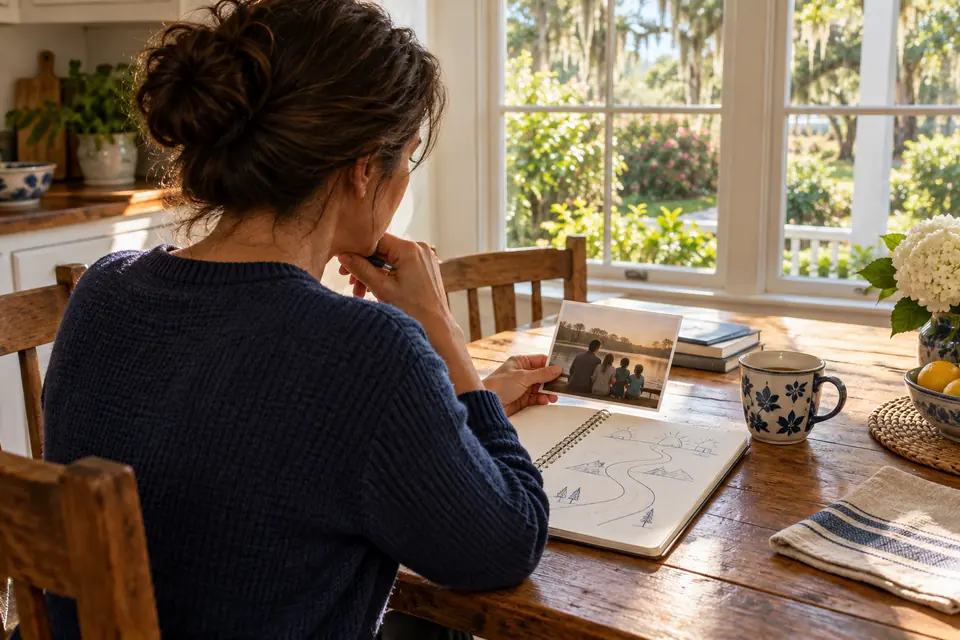
Think of something useful you learned from another person. It may be a practical skill, a way of approaching a problem or an example of reliability. Describe what the person actually did and why it helped. Keep the account accurate rather than turning a complicated relationship into a perfect lesson.
Now ask which part you want to carry forward in your own conduct. You may keep the useful practice while changing how it is taught or adapting it to a different setting. Passing something on does not require reproducing every detail of the original arrangement. A practice earns its place because it serves a worthwhile purpose now, not simply because it has been repeated for a long time.
Choose conduct you can influence
Separate your own choices from another person’s eventual response. You can prepare an explanation, keep a promise or make a useful record available. You cannot guarantee that someone will adopt the practice, value it in the same way or build the future you imagine. A daily legacy exercise should not turn another person’s life into evidence of your success.
Write the action you can responsibly take and the choice that remains with the other person. This boundary can make the action more generous because it removes an unspoken demand for a particular response. If a child or dependent person is involved, honor the relevant adult responsibilities and appropriate limits. Respectful teaching and care require attention to the actual relationship, not an abstract wish to leave an impressive influence.
Make the useful knowledge understandable
If you want to share a skill, describe the situation where it helps, the materials it needs and the order of the important steps. Include the point where someone should stop and ask for appropriate help. A confident demonstration without its limits can leave a learner with less understanding than a modest explanation that makes uncertainty visible.
Use an example suited to the learner’s current experience. Ask what they already know rather than assuming they need the same introduction you once received. Let questions change the explanation. Where a task involves hazards, professional standards or specific requirements, use appropriate qualified instruction instead of treating a family demonstration as sufficient authorization. The purpose is useful learning, not proving that informal experience replaces every form of expertise.
Model how to correct an error
An ordinary mistake can reveal a practice worth carrying forward. You might acknowledge that you gave incomplete information, missed an agreed task or misunderstood a request. Describe the correction in terms of what happened and what needs attention. Avoid making the other person responsible for reassuring you before the practical issue can be addressed.
Where appropriate, explain what you will do differently next time and then follow through. Do not use a planning exercise as a substitute for a necessary apology, repair or professional response. The useful example is not a claim that careful people never make mistakes. It is a visible way of responding honestly when a choice has affected someone else. Keep the explanation proportionate to the situation and respectful of the people involved.
Preserve a record for a real use
Some knowledge becomes easier to share when it is recorded. You might write a recipe, explain the care of a shared object or label the location of appropriate instructions. Start with the person and situation the record is intended to help. A large collection of memories or materials is not automatically useful if nobody can identify what to do with it.
Keep private information protected and obtain permission before recording or sharing someone else’s story. Do not publish family details merely because the account feels meaningful to you. If the record concerns important personal or professional matters, verify facts through suitable sources and keep any required formal documentation separate. This exercise can improve an ordinary explanatory note; it cannot establish that a document meets legal or professional requirements.
Try a fictional repair lesson
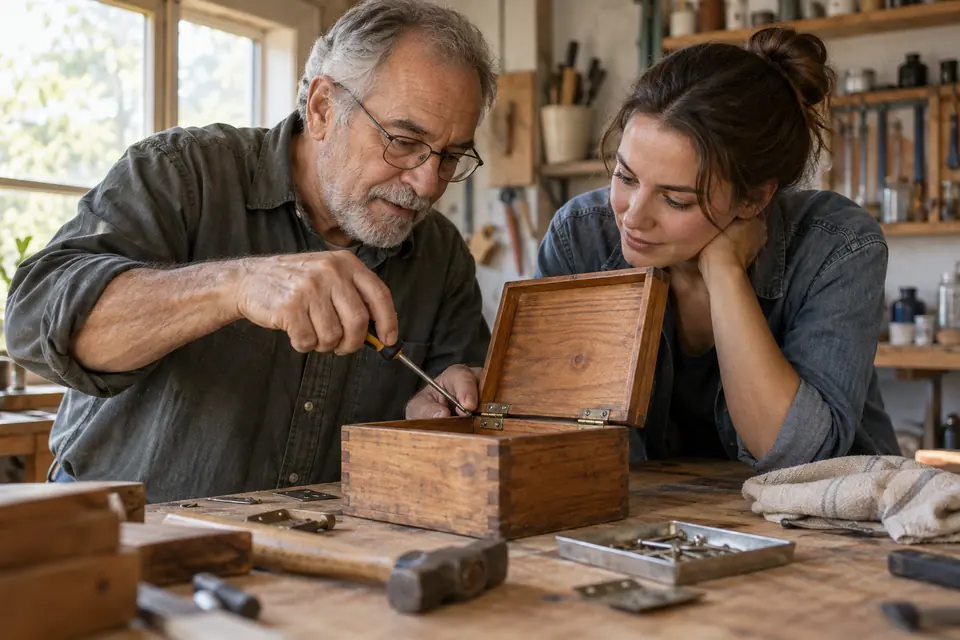
Imagine an adult showing a younger relative how to repair a loose hinge on a small wooden box. The adult first asks whether the learner wants to participate, checks that the task and tools are suitable and explains the limited job. The learner watches, asks a question and attempts an appropriate part with supervision.
The adult points out a mistake in the first alignment and calmly shows how to check it before continuing. Afterward they leave a simple note with the safe storage location of the relevant instructions. The value of the occasion is not that the learner must become a craftsperson. It is a practical example of explaining a task, respecting limits and correcting an error without hiding it. Adapt the structure to a suitable ordinary practice in your own setting.
Connect the intention with a recurring choice
Choose a situation likely to arise again and identify the conduct you want to practice there. You might prepare a clearer handoff when lending an item or make room for a question when explaining a task. A recurring opportunity gives the intention a practical place to live without requiring a special occasion.
Keep the commitment small enough to carry out responsibly. An ambitious promise to teach everything you know may create pressure and disappointments that a focused practice would avoid. Consider what preparation the action needs and whether the other person actually wants the proposed help. The family-priority guide can help where the practice becomes a shared arrangement requiring agreement about time and work.
Review the experience without claiming a lasting outcome
After an attempt, record what you did, what the other person actually expressed and what you learned about the explanation or arrangement. Keep observation separate from prediction. A useful conversation today does not establish how someone will remember it or what future choices they will make.
Ask whether the action served the intended practical purpose and respected the other person’s agency. You may need to simplify a note, choose a better occasion or stop offering a form of help that is not wanted. Those adjustments can improve the practice without requiring a dramatic account of your influence. The record belongs first to your own review of conduct, not to a public claim about another person’s results.
Choose the next ordinary contribution
Finish with one action, the person or setting it is intended to help and the boundary that should remain intact. State how you will know whether you actually performed the action. Keep the conclusion within your control: an explanation offered, a promise kept or an accurate record prepared with appropriate permission.
Return to the intention when the relevant occasion arises. You can revise the practice as the relationship and circumstances change. The Life planning collection offers related exercises on responsibility and personal direction. For a reading group, the book and workbook can support discussion using fictional examples so nobody needs to disclose family histories, private records or another person’s personal information to participate.
Build your private practice page
Choose a small practice you would like to make understandable to someone else, such as caring for a shared household object. Write the situation where the practice is useful, the reason for each important step and the limit beyond which a person should seek suitable help. Read the explanation without relying on gestures or a shared memory. Notice where a learner might not understand a word, locate a material or recognize that something has changed. Revise those points before assuming the explanation is clear. An ordinary record can carry more useful knowledge when its intended reader is treated as a real person with different experience.
Next, decide whether the person actually wants this explanation and how you can offer it without imposing a future role. A younger relative may enjoy learning one task without wanting to inherit a hobby or a responsibility. Another adult may prefer a written note to a demonstration. Leave room for those preferences. If the practice involves a hazard or specialized requirement, obtain appropriate instruction and respect the relevant limits rather than presenting your explanation as sufficient qualification. The aim is a useful contribution within an actual relationship, not an obligation for someone else to preserve your preferred image of that relationship.
At the next suitable occasion, offer the practice in the agreed form and listen to the questions it produces. Record what you need to explain differently, not what you hope the occasion proves about your influence. If no suitable occasion arises, keep the intention provisional rather than creating pressure for a demonstration. A daily legacy practice may remain modest: an accurate explanation, a reliable handoff or a correction made without concealment. Its value does not depend on an audience, a published story or a prediction about the learner’s future choices.