Define the finish before reviewing the middle
Choose one goal that is still in progress and write what completion would mean. Keep the definition specific enough to distinguish a finished output from work that merely happened nearby. A repaired object, an agreed arrangement or a completed learning task offers a clearer reference than getting better at everything.
If the finish has changed, record the change before assessing progress. Otherwise you may compare today’s work with a different goal than the one that guided the earlier effort. You do not need a perfect forecast of every step. You need a current description of the result so evidence from the middle can be interpreted honestly. This exercise does not turn partial work into completion; it helps identify what the partial work actually establishes.
Gather concrete outputs from recent attempts
List what now exists that did not exist at the earlier starting point. You may have a draft, a verified answer, a prepared material or an agreed handoff. Use ordinary nouns and actions rather than descriptions such as feeling productive. An output can be useful even when it is incomplete, provided its current state is described accurately.
Include only outputs relevant to the chosen goal. A busy week can contain worthwhile work without all of it advancing this particular project. Keeping the boundary clear prevents the review from becoming either a search for praise or an unfair dismissal of everything you did. You are asking what changed in relation to one goal, not deciding whether the whole week or the person who lived it deserves approval.
Separate preparation from the result it supports
Preparation deserves recognition when it removes a real barrier or makes a next action possible. Gathering suitable materials, obtaining permission or clarifying requirements can be necessary progress. Name the next action that the preparation supports so you can see its practical role rather than counting all preparation as equivalent to the final result.
Also notice preparation that has become a substitute for trying the work. Repeatedly rearranging materials may feel easier than making the first attempt. That does not mean preparation is always avoidance; it means the review should ask what new capability or information it produced. If nothing relevant changed, choose a more direct next step or identify the question that is still making an attempt unsuitable.
Identify which uncertainty has been reduced
Progress can include learning that changes a decision. A confirmed requirement, a useful response or an appropriately limited trial may reveal something important even when the visible output remains small. Record the original uncertainty and the answer actually obtained. This makes the information gain easier to assess.
Keep the answer within its limits. One successful attempt may establish that a method worked under those conditions, without proving that the whole project will succeed. An unanswered request may establish that you need a different source or a later follow-up, not that permission has been granted. Evidence becomes more useful when its scope is explicit. You can value a real answer without asking it to guarantee everything that follows.
Distinguish improved ability from repeated activity
If the goal involves learning, ask what you can now explain, recognize or perform more independently. Practice time provides context, but it does not by itself describe what was learned. Choose an appropriate small demonstration or relevant feedback to understand the current state of the skill.
Do not turn every practice session into a performance test. A proportionate review can happen at a sensible interval and use a task suited to your experience. Keep any professional or safety requirements with the appropriate qualified sources. The personal-measures guide helps choose a baseline; this page uses the available evidence to understand a goal that remains unfinished.
Write what remains without canceling what changed
Create a separate list of necessary remaining work. Include unresolved questions, missing outputs and dependencies on other people. The remaining list should be accurate, but it should not erase the completed output simply because the finish is still distant. Both facts can be true at the same time.
Avoid describing the remainder as a general personal deficiency. A task such as confirm the handoff time gives the next attempt direction; a conclusion such as I never finish anything does not. If the remaining work is larger than you expected, revise the sequence or commitment using that information. Honest recognition of progress includes enough attention to the remainder that the review supports a responsible next action.
Try a fictional chair-restoration review
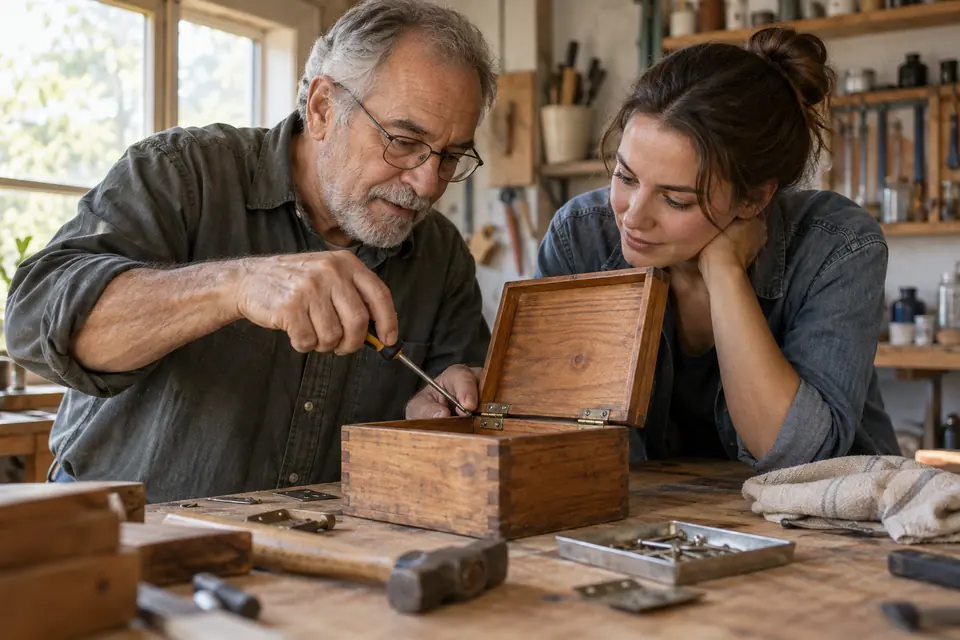
Imagine a reader restoring a small chair for ordinary household use. The reader has cleaned the surfaces and completed one appropriate repair, while other work remains. The review distinguishes the prepared surface, the repaired section and the tasks that still need suitable instruction or qualified help. It does not call the chair finished or safe to use merely because part of it looks better.
The reader records which method worked on the completed section and which uncertainty remains elsewhere. The next action follows the real condition of the project. This gives a more useful account than either declaring the whole project complete or dismissing the week because the chair is not ready. Use the example’s distinction between output, evidence, limits and remaining work in a suitable goal of your own.
Choose recognition that does not distort the work
Decide how to acknowledge a real completed part. You may mark it in a private note, pause to notice what it required or share a limited update with someone appropriately involved. Recognition need not be public or elaborate to be meaningful. Keep the description tied to what actually happened.
Avoid attaching a reward or announcement that pressures you to overstate readiness. If another person relies on the final output, make its unfinished status clear. A group can practice describing progress with fictional projects so participants do not need to expose personal setbacks or compete over milestones. The purpose of recognition is to make useful evidence visible, not to replace the work or require others to approve your interpretation.
Use the evidence to choose the next attempt
Ask what the current evidence makes possible now. A clarified requirement may allow a draft; a completed draft may allow relevant feedback; a confirmed arrangement may allow preparation for the first occasion. Link the next step to the state of the work rather than selecting an impressive action unrelated to the actual dependency.
Choose an attempt with a clear output or question. If progress revealed that the original approach does not fit, the next action may be a deliberate revision rather than more effort in the same direction. The next-step exercise can help translate the review. Preserve what you learned so the next attempt starts with better information instead of reopening the same uncertainty.
Keep a short evidence-and-remainder note
Finish with four items: what changed, what that change establishes, what remains and what you intend to do next. Keep the note short enough to revisit before the next opportunity. Include any limit another person needs to understand, especially where the final output is not yet ready for use or reliance.
Review again when another meaningful output or answer is available. You do not need to inspect the project constantly to prove that it matters. The Life collection provides related exercises for planning and review. The book and workbook can support a broader private reflection, while any specific requirements or decisions remain subject to the actual facts and appropriate guidance.
Build your private practice page
Prepare a progress note for a project with several visible parts. Give each relevant part one accurate description: ready for its intended use, prepared for the next stage, attempted but needing correction, or waiting for an answer. Avoid forcing every part into a single overall percentage unless that number has a meaningful basis. A percentage can look precise while hiding the difference between an easy repeated task and a consequential unresolved requirement. The descriptions should help you decide what can responsibly happen next and what another person still should not rely on.
Choose one part that genuinely changed and explain the evidence. If a draft exists, identify what kind of draft and which review remains. If a question was answered, identify the answer and its scope. If a practical step was completed, distinguish completion of that step from readiness of the whole output. This is particularly important where safety, permissions or professional requirements matter. Personal satisfaction with a visible improvement does not establish that an object, arrangement or service is ready for use. Keep any necessary qualified assessment separate from the exercise of noticing progress.
Now identify the next dependency and write a suitable action to address it. Keep the action connected with the actual state you described rather than with a desire to make the progress note look better next time. You may need feedback, a correction, a current answer or a pause while another person decides. At the next review, keep the earlier description available so you can see what changed. An honest record can be encouraging because it gives specific effort and learning somewhere to appear, while leaving the remaining responsibility clear.